Skip to content


UK airports are facing a growing skills challenge as the electrification and automation of ground support vehicles accelerates. The rapid introduction of electric and autonomous vehicles has created a gap between technology adoption and workforce preparedness, with implications for safety, efficiency, and compliance on airport aprons.
Recent moves are driving this transition forward. Earlier this month, the Government launched the Airside Automation Group, bringing together Heathrow Airport, Aer Lingus, and International Airlines Group (IAG) to speed up the deployment of new technologies. At the same time, trials of autonomous baggage tugs and electric passenger buses are underway at both Heathrow and Teesside International, testing how these vehicles can operate safely in busy airside environments.
Major operators are also investing heavily. DHL, for example, has pledged £16 million to electrify its entire ground support equipment fleet at East Midlands Airport by 2032. The project marks one of the largest commitments of its kind in the UK and demonstrates how sustainability targets are reshaping ground handling operations.
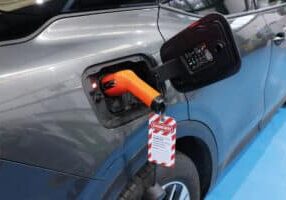
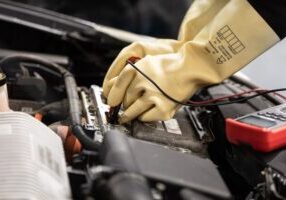
According to Autotech Training, these developments have brought the skills gap into sharp focus. Unlike conventional vehicles, EVs and AVs contain high-voltage systems and complex automation technology that require specialised knowledge to operate and maintain safely. Technicians without the correct training risk both injury and costly operational downtime, while employers face a duty of care to ensure staff can work safely under recognised standards.
“Airports are under pressure to decarbonise and modernise at unprecedented speed, but technology alone can’t deliver change,” comments Autotech Training’s Director of Operations, Alistair McCrindle.
“The workforce has to be ready to manage high-voltage and autonomous systems safely. We’re seeing a sharp increase in demand from airside teams seeking accredited, hands-on training so they can keep pace with these developments.”
The shift towards electrification is creating a pressing need for specialist training across the aviation industry. Autotech Training, an IMI-approved training provider, is helping airports and ground handling companies respond to this challenge.
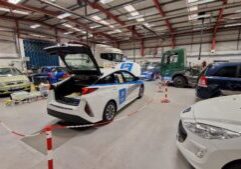
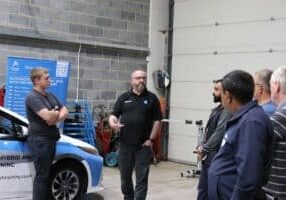
Its courses are delivered directly on-site, combining practical, hands-on experience with accredited instruction in electric and hybrid vehicle maintenance. By training technicians on the exact vehicles they use every day, Autotech Training ensures that learning is immediately relevant, minimises operational disruption, and builds lasting technical confidence.
This approach is already being adopted by some of the sector’s leading organisations. Menzies Aviation, Cobalt Ground Solutions, and DHL at East Midlands Airport have all partnered with Autotech Training to deliver IMI Level 2 and Level 3 Heavy Electric/Hybrid Vehicle courses to their engineers and technicians. The training takes place at their own facilities and on their actual high-voltage ground service equipment (GSE), such as tugs, high-loaders, and pushback vehicles. This ensures staff develop a deep understanding of the vehicles and systems they are responsible for.
The impact has been clear. Technicians are now better prepared to work safely with high-voltage systems, vehicle downtime has been reduced through improved fault diagnosis and preventative maintenance, and overall operational efficiency has increased.
As the industry continues its transition to fully electric fleets and equipment, this type of tailored, on-site, and accredited training is proving vital — helping organisations future-proof their teams and achieve their long-term sustainability and operational goals.
Experts say the skills gap is set to widen further as autonomous vehicles become more common. While the first wave of electrification at airports focuses on buses, tugs and cargo transporters, the next generation of connected systems will require technicians to have a deeper understanding of automation, software diagnostics and energy management. Without proactive training, airports risk delays, operational inefficiency and compromised safety.
The rise in demand for EV and AV training also reflects a broader industry shift. Aviation is one of the UK’s largest contributors to carbon emissions and airport operators are under pressure from regulators and customers to reduce their environmental impact. Transitioning ground fleets to electric power is a visible and measurable step, but it comes with practical challenges on the ground. Training technicians to handle these vehicles safely is therefore central to the success of decarbonisation strategies.
Autotech Training emphasises that hands-on learning is critical. Technicians trained only in classrooms may lack the confidence to troubleshoot high-voltage systems in real-world airport environments, where operational pressures are high. Delivering courses at the airport, using operational GSE, helps teams build practical skills alongside theoretical knowledge, reducing downtime and enhancing safety awareness across multiple operations.
“The future of airport operations is electric and increasingly autonomous,” concludes Alistair. “Ensuring airside teams have the right skills today is essential. Those who invest in workforce preparedness now will benefit from safer operations and a workforce ready to meet the needs of tomorrow’s airports.”