Skip to content


The UK automotive industry is entering a new chapter. With the passing of the Automated Vehicles (AV) Act 2024, the government laid the legal foundations for self‑driving vehicles to operate on British roads as early as 2026. It’s a move that positions the UK as a global leader in autonomous vehicle regulation and is expected to unlock an industry worth up to £42 billion, supporting around 38,000 skilled jobs by 2035.
Much of the public conversation around automated vehicles focuses on passengers, transport systems and futuristic cityscapes, but for independent garages and vehicle technicians, the implications are far more practical and far more immediate. Advanced driver assistance systems (ADAS) and automated technologies are already common in today’s vehicles and they will increasingly shape the work carried out in the automotive aftermarket.
While fully self‑driving cars may still feel a few years away for most motorists, the technologies that underpin them are already firmly embedded in modern vehicles. Features such as automatic emergency braking, adaptive cruise control, lane‑keeping assist, blind‑spot monitoring and parking assistance are now standard or optional on a wide range of vehicles.
These systems rely on a network of cameras, radar, lidar, sensors and control units working together with sophisticated software. As vehicles age and move through the aftermarket, independent garages will see more repairs and servicing jobs that involve these systems, whether that’s following accident damage, windscreen replacement, suspension work or routine maintenance.
The AV Act accelerates this trend. By creating a clear legal framework for automated vehicles, it encourages manufacturers and technology providers to bring more advanced systems to market. Over time, those vehicles will end up in independent workshops just like any other.
The core mechanical skills that technicians rely on today aren’t disappearing. Brakes, suspension, steering, tyres and powertrains will still need expert attention. What is changing is the balance of skills required to repair and return vehicles to the road safely.
Increasingly, technicians are expected to diagnose faults across integrated electronic systems, understand how sensors and cameras interact with vehicle dynamics, carry out precise calibration procedures after repairs and vallidate that safety‑critical systems are functioning correctly
In practical terms, this might mean that a routine repair now includes an ADAS calibration step, or that a warning light investigation involves software updates and system checks rather than component replacement.
With automated driving features, the margin for error is smaller. A misaligned camera or incorrectly calibrated radar sensor can directly affect vehicle safety. That places technicians at the centre of road safety outcomes, reinforcing the importance of competence and up‑to‑date knowledge.
As vehicle technology evolves, training naturally evolves with it. The AV Act 2024 highlights areas where skills development will become increasingly important across the aftermarket.
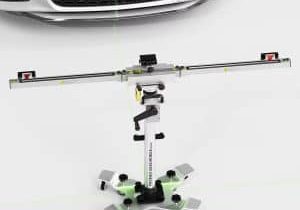
ADAS calibration is already a growing requirement for many workshops. As systems become more advanced and interconnected, understanding when calibration is required, how to perform it correctly and how to verify results will be essential.
Modern vehicles generate vast amounts of data. Effective fault‑finding now depends on advanced diagnostic tools, system interpretation and an understanding of electronic architectures.
Automated and semi‑automated vehicles rely heavily on software. Technicians will need to be comfortable with software updates, coding procedures, and post‑update checks to ensure systems remain compliant and safe.
Working on vehicles with automated functions introduces new safety considerations, from isolating systems correctly to understanding fail‑safe modes and manufacturer procedures.
Crucially, this doesn’t mean technicians must become software engineers overnight. Training can be structured and aligned with the types of vehicles and jobs a workshop already sees.
It’s understandable that new technology can feel daunting. But from a commercial perspective, the shift toward automated and advanced systems represents a significant opportunity for independent workshops.
Garages that invest in skills and equipment can take on higher‑value diagnostic and calibration work, reduce reliance on sub‑contracted services, build a reputation for competence with modern vehicles and retain customers who might otherwise return to main dealers
As the vehicle parc changes, customers will increasingly look for workshops that can service and repair newer, more complex vehicles with confidence. Being able to say “yes” to these jobs, rather than turning them away, helps future‑proof the business.
There’s also a people benefit. Technicians who are supported to upskill are more engaged, more confident and better positioned for long‑term careers in the industry.
One of the biggest misconceptions about future vehicle technology is that workshops need to transform overnight. In reality, preparation can be practical and incremental.
For many garages, the first steps might include identifying which ADAS‑equipped vehicles are already coming through the doors, understanding current calibration requirements, investing in targeted training for existing staff or building confidence with diagnostic processes and procedures.
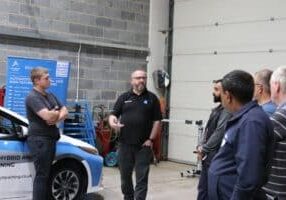
Training providers with strong aftermarket experience, such as Autotech Training, focus on helping technicians build relevant skills step by step aligned to real workshop needs rather than abstract future scenarios.
By starting early, workshops can spread investment over time, avoid last‑minute pressure and grow capability alongside the evolving vehicles of the future.
The Automated Vehicles Act 2024 marks a significant milestone for the UK automotive industry. While it brings change it also brings opportunity.
For independent garages and technicians, the rise of automated and advanced vehicles isn’t a threat to traditional skills, but an expansion of them. Mechanical expertise remains vital, now complemented by electronics, diagnostics, calibration and digital systems knowledge.
Workshops that view training as a proactive investment will be best placed to compete and thrive in the years ahead.